
MCAT Study Schedule: How to Build One That Actually Works (2026)
Build an MCAT study schedule for 3, 6, or 9 month timelines. Includes downloadable templates and tips from 99th percentile scorers.
A clear study schedule makes or breaks your MCAT prep. Without one, you can burn out, miss content, or run out of time before test day. Here's how to build a schedule that fits your timeline and goals.
Why a study schedule matters
A good schedule keeps you accountable. It spreads content and practice evenly and builds in review so nothing gets forgotten. Students who stick to a plan tend to improve more consistently than those who study when they can.
Choose your timeline
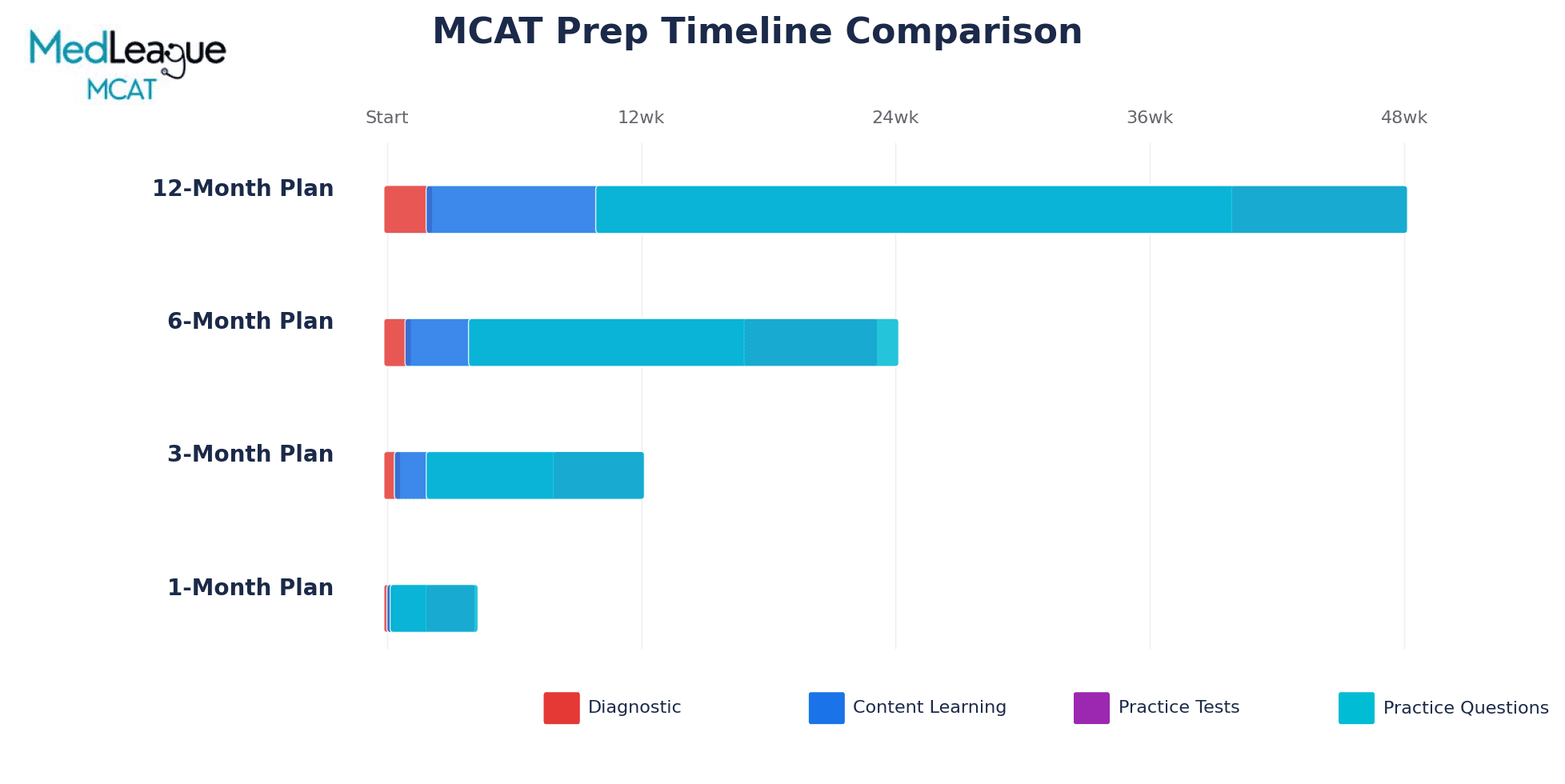
Most students prep for 3, 6, or 9 months. The right length depends on how many hours per week you can study and where you're starting from. Use the guidelines below and adjust for your own pace.
3-month timeline
Best if you can study 25 to 35 hours per week (for example, summer or a light semester). Focus on content review in the first month, then heavy practice and full-lengths. The risk: less room for setbacks. One bad week can throw things off. Only choose this if you're disciplined and already have a solid foundation.
6-month timeline
Best if you can study 15 to 20 hours per week, such as during the school year. You get a real balance of content review, question banks, and full-lengths, with enough time to fix weak areas. This is the most common choice and usually the most manageable.
9-month timeline
Best if you can study 10 to 15 hours per week or want a slower, lower-stress pace. You get more time for deep review, multiple passes through material, and building habits. Good if you're balancing a heavy course load or a job.
Build your schedule in blocks
Use four phases instead of one long blur of "studying."
-
Content phase. Go through each subject (biology, chemistry, physics, psych/soc, CARS) with notes or videos. Give more time to what you need to learn and less to what you're only reviewing.
-
Practice phase. Do passage-based and discrete questions. Mix subjects and do timed sets.
-
Full-length phase. Take at least 4 to 6 full-length exams, spaced every 1 to 2 weeks. Review each one thoroughly before the next.
-
Final review. In the last 1 to 2 weeks, do light content review, formula sheets, and rest. No cramming.
MedLeague live workshops fit into the content and practice phases. You get structure, accountability, and real-time answers from 99th percentile instructors.
Sample week (6-month plan, about 18 hours per week)
- Mon–Fri: 2 to 3 hours per day (for example, 1 hour content, 1 hour practice, 30 minutes review).
- Saturday: 4 to 5 hours (full-length or a long practice block plus review).
- Sunday: 1 to 2 hours (light review, flashcards, or catch-up).
Adjust the split as you move from content-heavy to practice-heavy. The main thing is consistency. Same blocks each week so it becomes routine.
Final tips
Block time on your calendar so MCAT study is non-negotiable. Build in buffer days when life gets in the way. Review your plan every 2 to 4 weeks and shift hours if a section is lagging. Use a mix of resources. Books, videos, and live instruction (like MedLeague workshops) keep you engaged and on track.
MedLeague's unlimited access and 14-day free trial slot into this kind of plan. Pick a timeline that fits, then stick to it and adjust as you go.
Get Your Free Study Plan
We put together a free 6-Month MCAT Study Plan with a week-by-week breakdown: what to study each week, how to split your hours, and when to schedule full-lengths. It's the same structure our instructors use with students. Enter your email below and we'll send you the PDF plus a short intro to MedLeague. No spam, just the plan and a few helpful emails.
(The download form appears below this post.)
Written by the MedLeague MCAT team. Our instructors scored in the 99th percentile on the MCAT and have helped thousands of students improve their scores.