
MCAT CARS Strategy: How to Study for the Hardest Section
A concrete MCAT CARS strategy from 99th percentile scorers. Practice passages, timing, and how to improve your score.
Critical Analysis and Reasoning Skills is the MCAT section that makes students the most anxious. Unlike Bio/Biochem or Chem/Phys, there's no content to memorize. No amino acid charts to drill. No equations to fall back on. CARS tests whether you can read a dense passage on an unfamiliar topic and figure out what the author actually means, all under time pressure. Here's how to get better at it.
Why CARS is different from every other section
The other three MCAT sections reward preparation in a straightforward way. Study the content, learn the formulas, practice applying them. CARS doesn't work like that. The passages come from humanities, social sciences, ethics, philosophy, art criticism, and other subjects you probably haven't studied in your premed coursework. You can't predict what you'll read on test day.
What you can predict is how the questions will work. CARS questions fall into three categories: what did the author say (comprehension), what did the author mean (reasoning), and how does this apply beyond the passage (application). Every passage, regardless of topic, gets tested through those same lenses. That's what makes CARS learnable. You're not studying subjects. You're building a skill set.
The timing problem
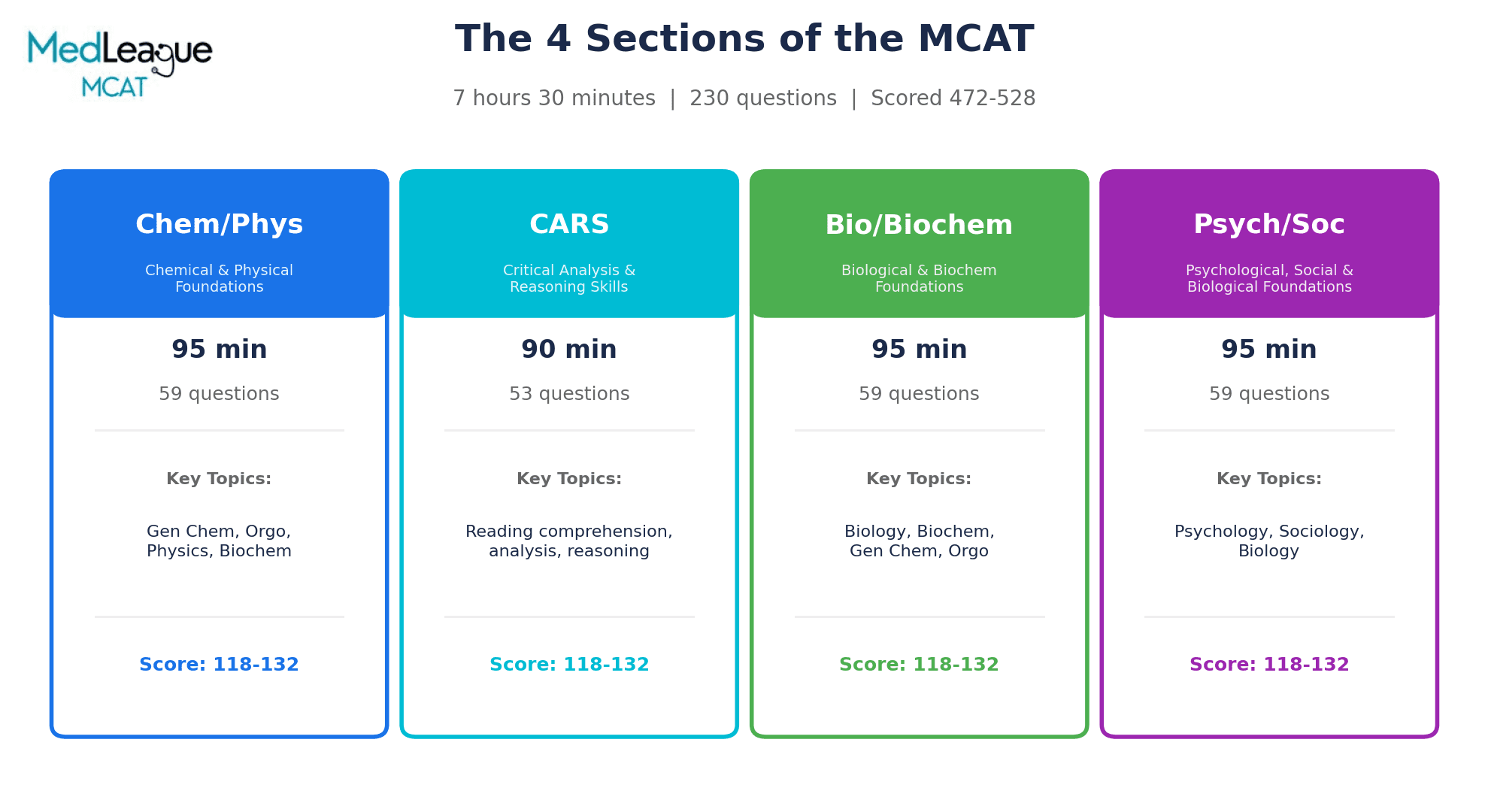
CARS gives you 90 minutes for 53 questions across 9 passages. That works out to about 10 minutes per passage, including reading time and answering 5 to 7 questions. Most students feel rushed at first. Some never stop feeling rushed.
The fix isn't reading faster. Speed-reading actually hurts your CARS score because it trades comprehension for pace. You end up rereading passages or second-guessing answers, which wastes more time than reading carefully in the first place. The real fix is reading more efficiently: knowing what to pay attention to, what to skip over, and when to move on from a question you're stuck on.
How to actually practice CARS
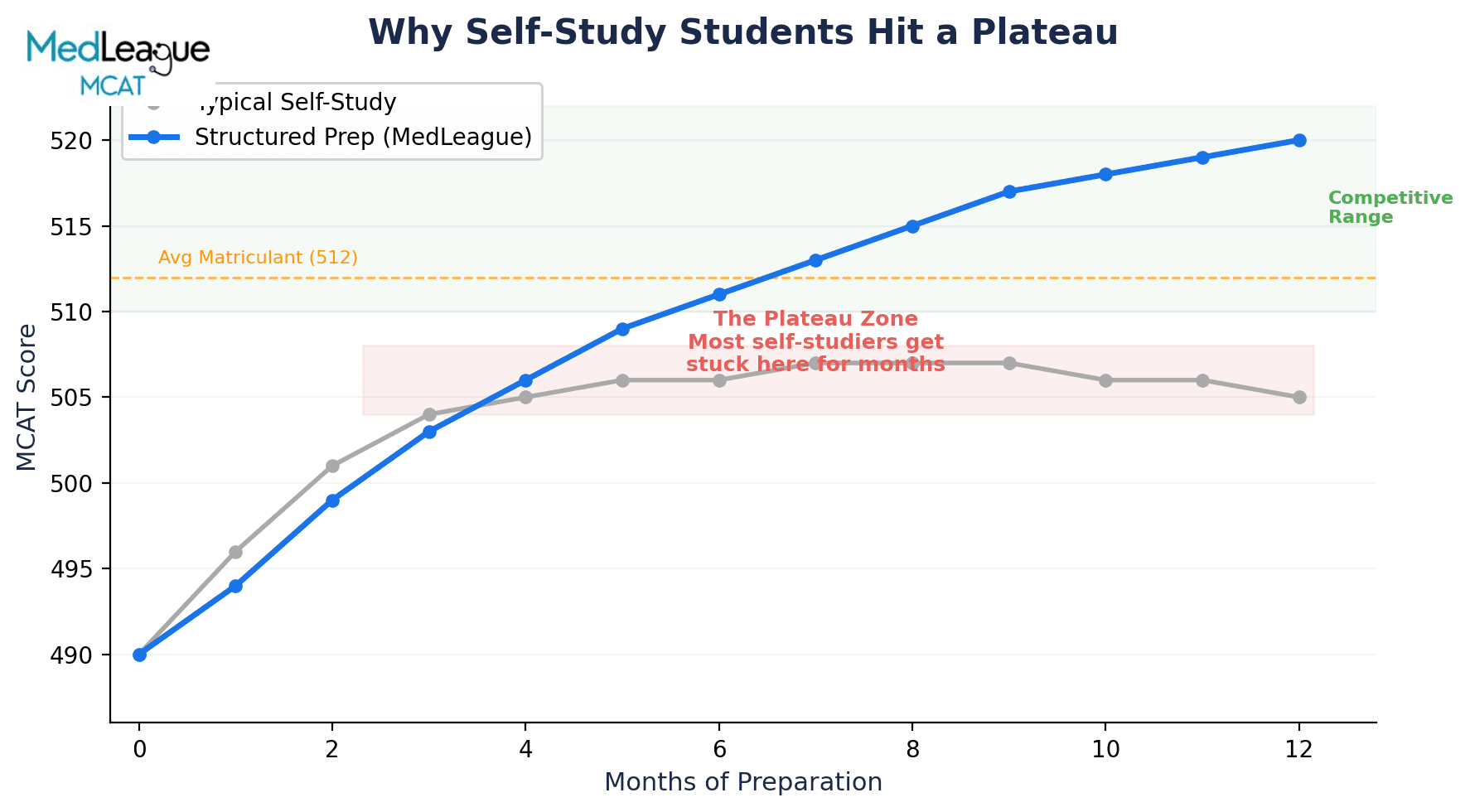
Doing one CARS passage per day, every day, from the start of your MCAT prep is the single most important habit you can build. CARS improves through volume and consistency, not cramming. A student who does 120 passages over four months will almost always outscore a student who does 40 passages in two weeks, even if they spend the same total hours.
Here's how to structure your daily practice.
Read the passage once, actively. Don't skim. Don't highlight everything. As you read, track two things: what is the author's main argument, and what is the author's tone (positive, negative, neutral, conflicted). By the end of the passage, you should be able to state the main point in one sentence. If you can't, you didn't read carefully enough.
Answer the questions without rereading the entire passage. Use your mental map of the passage to locate relevant paragraphs. Refer back to specific lines when a question asks about a detail, but don't reread from the top. That's where time disappears.
Review every question you missed. This is where the real learning happens. For each wrong answer, figure out which of the three question types it was (comprehension, reasoning, or application) and what went wrong. Did you misread the passage? Did you fall for a trap answer that was partially correct? Did you bring in outside knowledge? Each mistake has a pattern. Find yours.
The three question types and how to handle them
Understanding the question types changes how you approach CARS. Most students treat every question the same way, which is why they get stuck.
Comprehension questions ask what the author stated or implied directly. The answer is in the passage, and you can usually point to the specific lines that support it. The trap here is picking an answer that sounds reasonable but isn't actually supported by the text. Stay close to what the author wrote.
Reasoning questions ask you to interpret the author's argument. Why did they use a particular example? What assumption underlies their claim? What would weaken their position? These questions test whether you understood the logic of the passage, not just the words. The common mistake is confusing the author's view with a view they're describing or critiquing. Pay close attention to who is saying what.
Application questions ask you to take the author's reasoning and apply it to a new scenario. If the author argues that government regulation stifles innovation in one industry, an application question might ask what the author would likely say about regulation in a different industry. The key is identifying the principle behind the author's argument and extending it. Don't overthink it. These questions reward straightforward logic.
Common mistakes that keep scores stuck
Relying on outside knowledge. CARS passages often cover topics you might know something about. Philosophy, ethics, history. The test doesn't care what you know. It cares what the passage says. When your prior knowledge conflicts with the passage, the passage wins every time. Train yourself to answer based only on what you just read.
Spending too long on one question. If you've been staring at a question for over 90 seconds and you're between two answers, pick the one that's most directly supported by the passage and move on. You can flag it and come back if you have time. Losing two minutes on one question means rushing through the next passage, which costs you more points.
Not practicing under timed conditions. Untimed CARS practice is better than no practice, but it doesn't prepare you for the real constraint. Once you've done about two weeks of untimed practice to build your reading skills, switch to timed sets. Do groups of 3 passages in 30 minutes, then work up to full 9-passage sets in 90 minutes.
Reading too passively. If your eyes are moving but your brain isn't tracking the argument, you're wasting the first read. Active reading means asking yourself questions as you go. What is this paragraph doing? Is the author agreeing or disagreeing with this idea? Why did they bring up this example? This feels slow at first but actually speeds you up because you retain more.
Building a CARS practice schedule
Your CARS practice should evolve as your overall MCAT prep progresses.
Months 1 to 2 (content phase): One passage per day, untimed at first, then timed. Focus on building the habit and learning to identify question types. Review every passage thoroughly. This takes about 20 to 30 minutes per day.
Months 3 to 4 (practice phase): Two to three passages per day, all timed. Start doing sets of 3 passages back-to-back with a 30-minute timer. Review and track your accuracy by question type. Identify whether you're weakest at comprehension, reasoning, or application questions, and adjust your review accordingly.
Months 5 to 6 (full-length phase): Full 9-passage CARS sections under real test conditions. When you take full-length practice exams, treat the CARS section like the real thing. No pausing, no extra time. Review the entire section afterward and note which passages gave you trouble and why.
Free daily CARS practice and study plan
Finding quality CARS practice is one of the biggest challenges. Most free resources are low quality or don't come with explanations. MedLeague offers a free CARS passage every day with detailed answer explanations for every question. You'll see why each right answer is right and why each wrong answer is wrong, which is exactly the kind of review that moves your score.
Enter your email below to get a 6-Month MCAT Study Plan with CARS practice built into every week. No spam, just the resources and a few helpful follow-up emails.
(The download form appears below this post.)
Where to find good CARS practice passages
MedLeague's free daily CARS passage. A new CARS-style passage every day with detailed answer explanations. Every question breaks down why the correct answer is correct and why each distractor is wrong. Sign up at /daily-cars to get it delivered to your inbox each morning.
AAMC materials are the gold standard. The official AAMC CARS question packs and full-length exams use the same logic as the real test. Use these in the second half of your prep when you've already built your skills with third-party passages. You want to save them for when your technique is solid so you get the most accurate score predictions.
Third-party passages for daily practice. Jack Westin offers free daily CARS passages that are well-regarded. UPangea (formerly UWorld) also has strong CARS questions with detailed explanations. These work well for your content phase before you transition to AAMC materials.
Reading outside of prep. This is optional but helpful if CARS is your weakest section by a wide margin. Read long-form articles from sources like The Atlantic, The New York Review of Books, or academic journal abstracts in the humanities. Not for content, but for the practice of tracking complex arguments in unfamiliar territory. Even 15 minutes a day of this kind of reading builds the muscle that CARS tests.
How MedLeague helps with CARS
CARS is one of the most-requested topics in MedLeague's live workshops. The instructors walk through passages in real time, showing you how they identify the main argument, eliminate wrong answers, and handle the ambiguous questions that trip most students up. It's one thing to read about these strategies. It's another to watch a 99th percentile scorer model the thought process live and then practice it with feedback.
MedLeague's workshops also cover the passage types that students find hardest: philosophy, ethics, and art criticism. These are the ones where most self-studiers struggle because the writing style is so different from science texts. Getting coached through these passage types accelerates the learning curve significantly.
The 14-day free trial lets you attend as many live sessions as you want, including the CARS-focused workshops. If CARS is where you're losing points, this is worth trying before committing to anything.
The bottom line on CARS
CARS isn't a talent. It's a skill. Students who feel stuck on CARS almost always share the same pattern: they started practicing too late, they don't review their mistakes carefully, or they're relying on instinct instead of a systematic approach to the question types. Fix those three things and your score will move.
Start daily CARS practice from day one of your prep. Learn the three question types and how to identify them. Review every missed question until you understand exactly what went wrong. Practice under timed conditions once your fundamentals are solid. And if you want guided practice from instructors who scored in the 99th percentile, check out MedLeague's approach to CARS.
The section is hard. It's also the section where consistent practice produces the most predictable improvements. Put in the daily reps and the score will follow.
Written by the MedLeague MCAT team. Our instructors scored in the 99th percentile on the MCAT and have helped thousands of students improve their scores.