
How to Study for the MCAT: A Complete Guide
A step-by-step guide to MCAT prep covering diagnostic tests, content review, practice questions, and full-length exams. Includes a free week-by-week study plan.
Preparing for the MCAT is a marathon, not a sprint. Most students need 3 to 6 months of structured study to hit their target score. This guide walks you through the four phases of MCAT prep and how to build a study plan that works.
The four phases of MCAT prep
Every successful MCAT prep follows the same arc: diagnostic, content learning, practice questions, and full-length exams. You can't skip phases or rush through them. Each builds on the last.
Phase 1: Diagnostic test
Take a full-length practice exam before you start studying. This tells you where you're starting and which subjects need the most work. Don't worry about the score. The goal is to see what you know and what you don't.
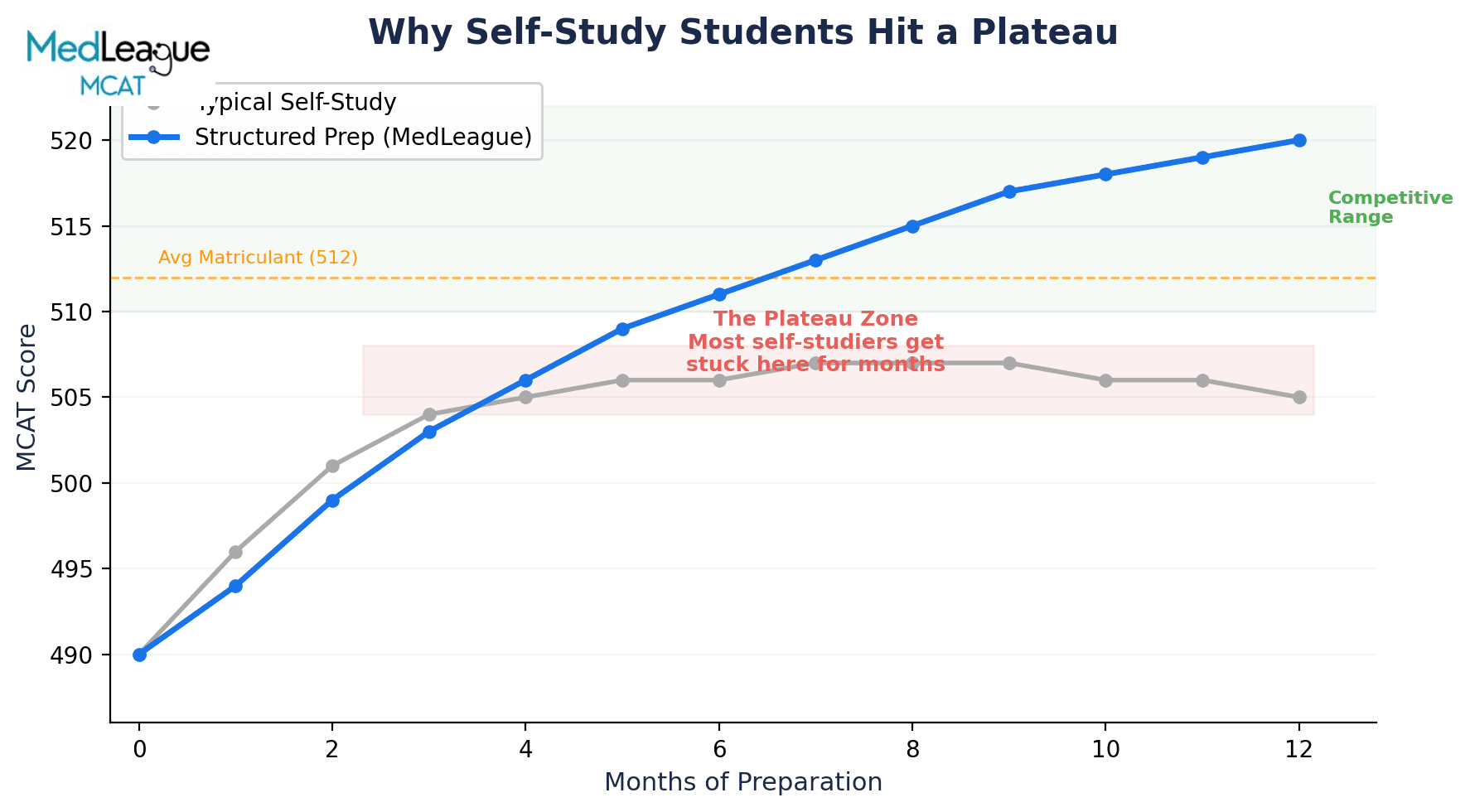
Most students score between 490 and 500 on their first diagnostic. That's normal. A 520+ diagnostic is rare. Use your diagnostic to set a realistic target score and timeline.
Phase 2: Content learning
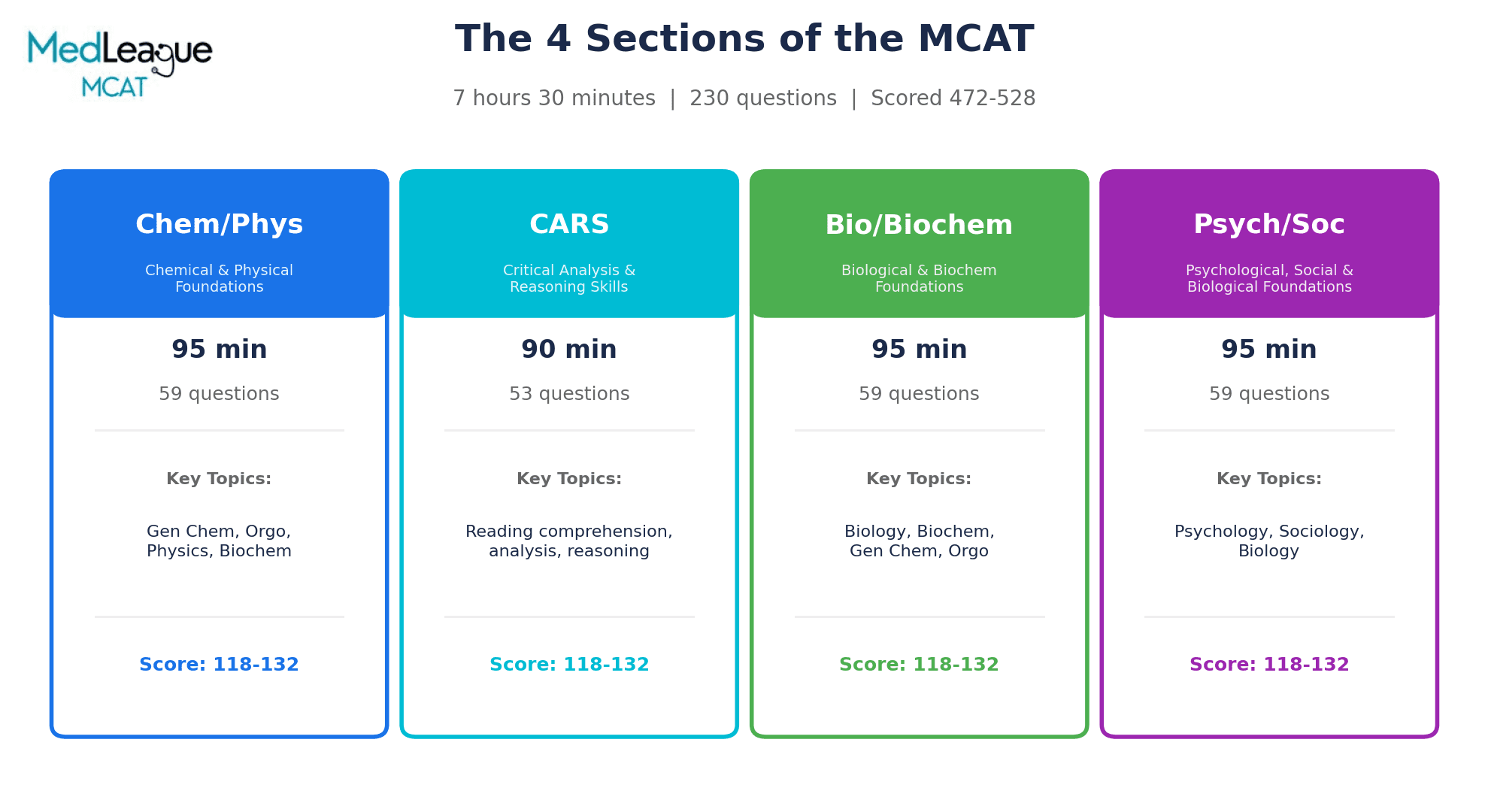
Spend the first 30 to 40 percent of your prep time learning or reviewing content. Cover biology, biochemistry, general chemistry, organic chemistry, physics, psychology, and sociology. You don't need to master everything. Focus on high-yield topics and the subjects you're weakest in.
Use books, videos, or live instruction. MedLeague's daily workshops cover content systematically, so you don't have to figure out what to study each day. If you're self-studying, follow a content schedule that covers all subjects at least once.
Phase 3: Practice questions
After content, shift to passage-based and discrete questions. Do timed sets. Mix subjects. Review every question you get wrong. This phase teaches you how to apply what you learned and how to read MCAT passages efficiently.
Most students spend 40 to 50 percent of their prep time on practice questions. This is where scores improve the most. You'll see patterns in how questions are asked and how to eliminate wrong answers.
Phase 4: Full-length exams
Take at least four full-length practice exams, spaced every 1 to 2 weeks. Review each one thoroughly before the next. In the last 2 to 3 weeks before your test date, focus on light review, formula sheets, and rest. No cramming.
Full-lengths build stamina and show you how you'll perform on test day. They also reveal timing issues and subject gaps you might have missed.
How long should you study?
Most students prep for 3, 6, or 9 months. The right length depends on how many hours per week you can study and where you're starting from.
3 months: Best if you can study 25 to 35 hours per week. You'll move fast through content and spend most of your time on practice. Risk: less room for setbacks. One bad week can throw things off.
6 months: The most common choice. Works well if you can study 15 to 20 hours per week. You get a real content phase, a solid practice phase, and room for at least four to six full-lengths. This is the timeline we recommend most often.
9+ months: Good if you can only study 10 to 15 hours per week or if you're starting very early. You have plenty of buffer, but the risk is losing momentum over such a long timeline.
Building your study schedule
A good schedule keeps you accountable. It spreads content and practice evenly and builds in review so nothing gets forgotten.
Step 1: Choose your timeline
Pick 3, 6, or 9 months based on your hours per week and start date. Be realistic. If you can only study 10 hours per week, don't try a 3-month plan.
Step 2: Block time on your calendar
MCAT study should be non-negotiable. Block the same hours each week. If you study Monday through Friday evenings and Saturday mornings, stick to that. Consistency matters more than perfect timing.
Step 3: Allocate time by phase
- Months 1–2 (or weeks 1–8 in a 3-month plan): Content learning
- Months 3–4 (or weeks 9–16): Practice questions
- Months 5–6 (or weeks 17–24): Full-length exams and review
Adjust based on your timeline, but keep the phases in order.
Step 4: Review and adjust
Check your progress every 2 to 4 weeks. If a section is lagging, shift more hours there. If you're ahead, you can move to the next phase early. Don't stick to a plan that isn't working.
Common mistakes to avoid
Studying content for too long
Some students spend 70 percent of their prep on content review. That's too much. Content is important, but practice questions and full-lengths are where scores improve. Aim for 30 to 40 percent content, 40 to 50 percent practice, and 20 to 30 percent full-lengths.
Skipping full-lengths
Full-length exams are hard and time-consuming. It's tempting to skip them or do fewer than four. Don't. Full-lengths build stamina and show you how you'll perform on test day. They're non-negotiable.
Not reviewing mistakes
Getting questions wrong is normal. Not learning from them is the problem. Review every question you miss. Understand why the right answer is right and why you picked the wrong one. This is how you improve.
Cramming the night before
The MCAT is a 7.5-hour test. You can't cram for it. The night before, do light review or nothing at all. Get sleep. Eat breakfast. Show up rested.
Where MedLeague fits in
MedLeague's live workshops follow this exact structure: content first, then practice, then full-lengths. You get 99th percentile instructors, unlimited access to replays, and a 14-day free trial so you can try the structure before committing.
If you'd rather have a ready-made timeline and live support instead of building it all yourself, that's what we're for. Our instructors have helped thousands of students improve their scores using this same four-phase approach.
Get your free study plan
We put together a free 6-Month MCAT Study Plan with a week-by-week breakdown: what to study each week, how to split your hours, and when to schedule full-lengths. It's the same structure our instructors use with students. Enter your email below and we'll send you the PDF plus a short intro to MedLeague. No spam, just the plan and a few helpful emails.
(The download form appears below this post.)
Bottom line
MCAT prep follows four phases: diagnostic, content, practice, and full-lengths. Most students need 3 to 6 months. Build a schedule that fits your timeline and stick to it. Review your progress regularly and adjust as needed. If you want structure and support, MedLeague's workshops follow this exact approach.
Written by the MedLeague MCAT team. Our instructors scored in the 99th percentile on the MCAT and have helped thousands of students improve their scores.