
MCAT Question of the Day: Free Daily CARS Passages for Practice
Get a free MCAT question of the day with full CARS passages, explanations, and daily email delivery. Build the habit that moves your score.
If you're studying for the MCAT, you've probably searched for an MCAT question of the day at some point. The idea is simple: one question, every day, to keep your prep moving even on busy days. It's a solid concept. But most "question of the day" tools give you a single multiple-choice question pulled from Bio/Biochem or Chem/Phys, and that's it. One isolated question with no passage context and a two-line explanation. That's not how the MCAT actually works, and it's especially not how CARS works.
CARS is the section where daily practice matters most, and it's the section that gets the least attention from free question-of-the-day tools. That's a problem, because CARS is the one section you can't cram for. It's a skill built through volume and repetition. So MedLeague built something better: a free MCAT CARS Question of the Day that gives you a full passage with multiple questions and detailed explanations, every single day.
Why a single question per day isn't enough for CARS
Most MCAT question-of-the-day services give you a standalone question. That format works okay for content-based sections where you're testing whether you remember a fact or can apply a formula. But CARS doesn't test facts. It tests your ability to read a complex passage, understand the author's argument, and answer questions that require you to reason about what you just read.
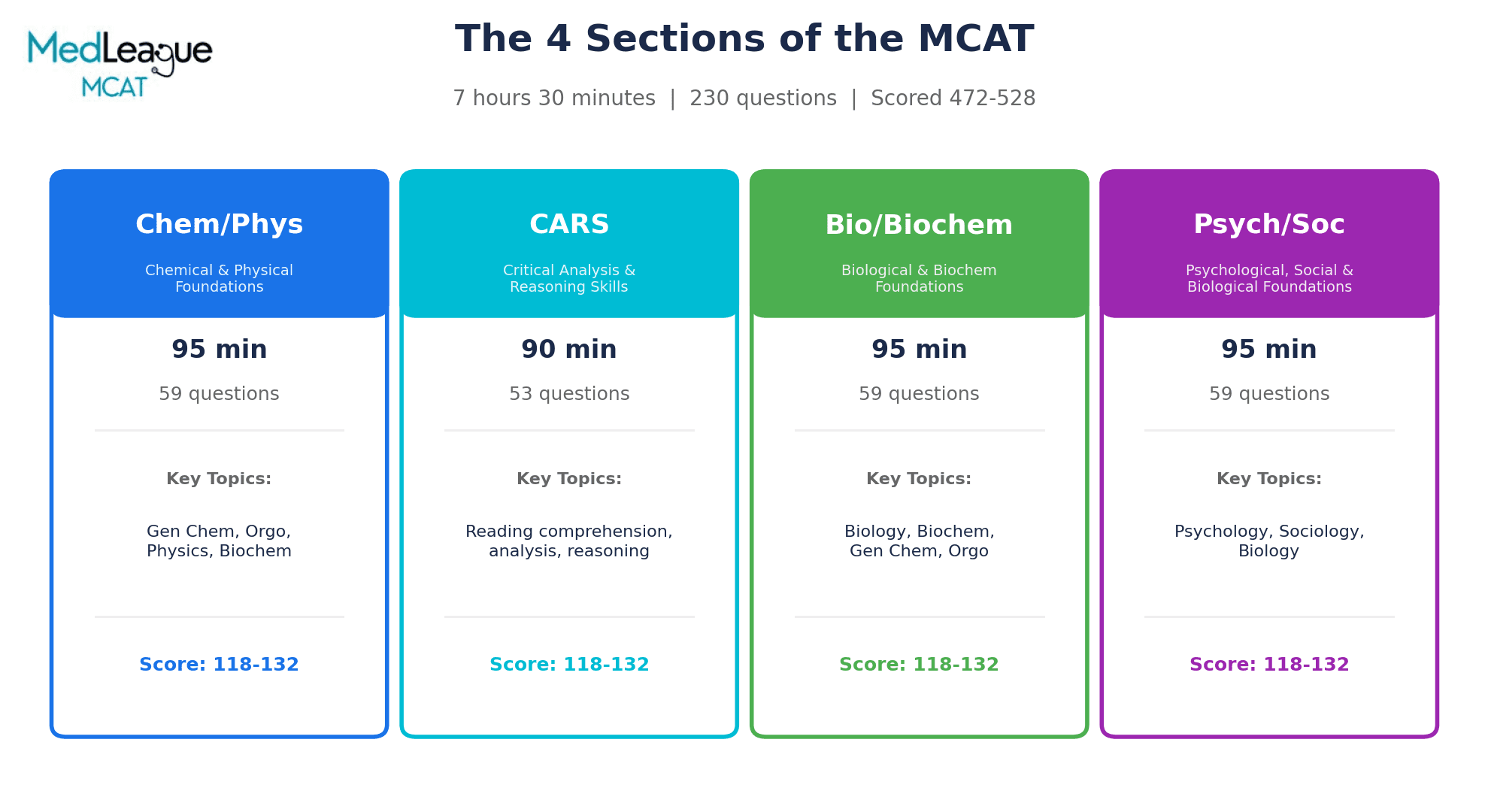
A single CARS question without a passage is meaningless. The entire skill is passage-dependent. You need to practice reading 600 to 700 words of dense, unfamiliar prose, holding the argument in your head, and then working through 5 to 7 questions that probe your comprehension from different angles. That's what the real MCAT CARS section demands, and that's what your daily practice should replicate.
What makes a good MCAT CARS question of the day
The best daily CARS practice mimics the real testing experience as closely as possible. Here's what that looks like.
A full-length passage, not a snippet. Real MCAT CARS passages are 500 to 700 words drawn from humanities, social sciences, philosophy, ethics, and the arts. Your daily practice should use the same length and subject matter. Short paragraph excerpts don't build the stamina or the reading strategy you need.
Multiple questions per passage. On the real MCAT, each CARS passage comes with 5 to 7 questions. Practicing with a full question set teaches you how the different question types interact. A comprehension question might set up context that helps you with a reasoning question later. You lose that when you practice questions in isolation.
Detailed answer explanations. Knowing you got a question wrong isn't useful unless you understand why. Good explanations break down why the correct answer is correct, why each distractor is wrong, and what reasoning error led to the mistake. This is how you identify patterns in your thinking and actually improve.
Fresh content every day. Repeating the same passages defeats the purpose. CARS improvement comes from exposure to a wide range of topics and writing styles. You need new material daily to keep building the adaptability that the real test requires.
MedLeague's MCAT CARS Question of the Day checks all of these boxes. Every day at midnight Eastern, a new full-length CARS passage goes live with 5 to 7 questions and complete explanations for every answer choice. It's free, and you can get it delivered straight to your inbox so you never miss a day.
How daily CARS practice changes your score trajectory
CARS is the MCAT section where consistency beats intensity. A student who reads one passage per day for four months will reliably outscore a student who binges 10 passages the week before the exam. The data from high scorers is clear on this: daily reps are what move the needle.
Here's why. CARS isn't testing whether you memorized something. It's testing a set of cognitive skills: tracking complex arguments, identifying author tone, distinguishing between what the author believes and what they're describing, and applying abstract reasoning to new scenarios. These skills develop like a muscle. Short, daily workouts produce better results than occasional marathons.
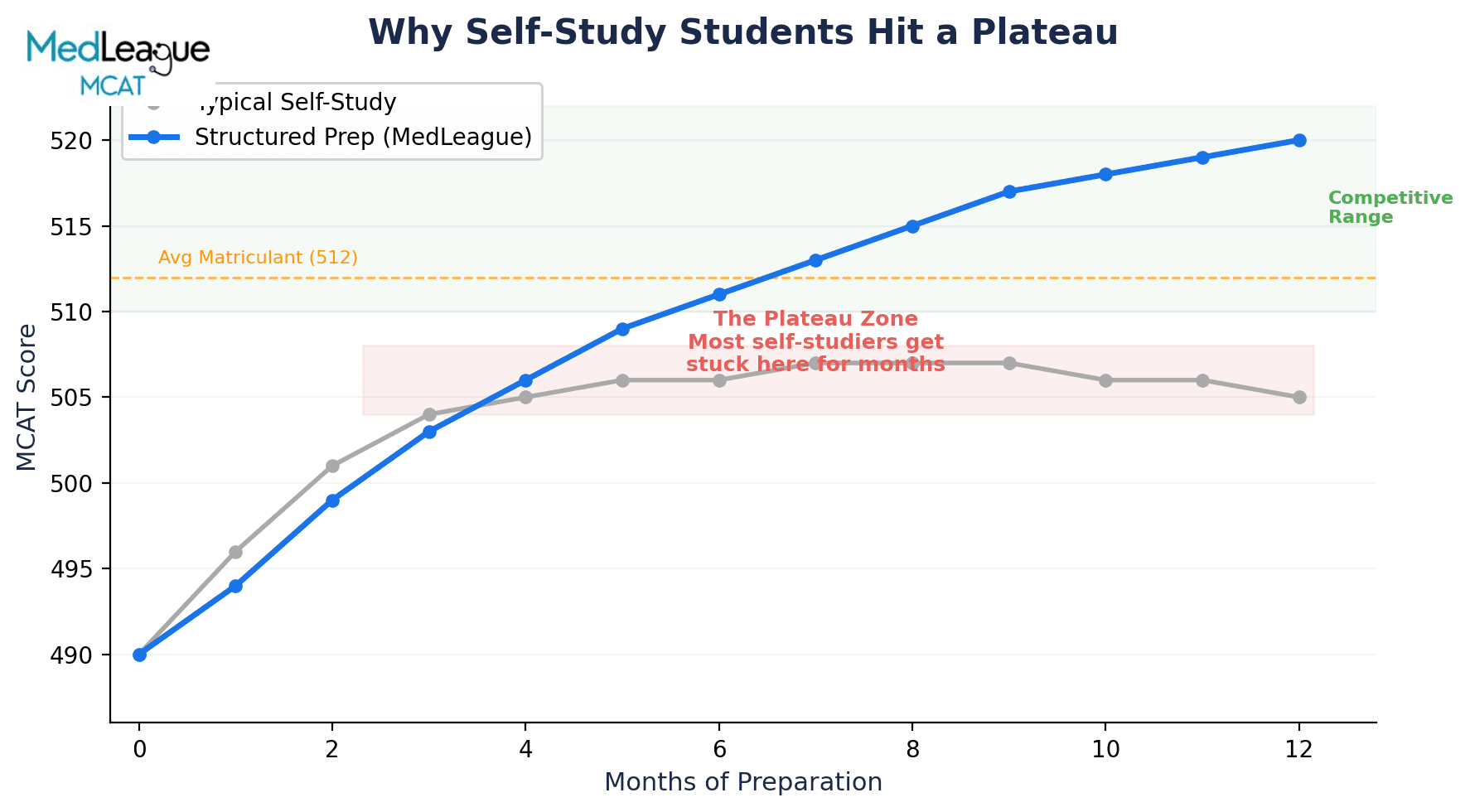
When you practice one CARS passage every day, several things happen over time.
Your reading speed stabilizes. You stop feeling rushed because your brain learns to process dense academic prose more efficiently. You won't speed-read — that hurts CARS performance — but you'll extract meaning faster on the first pass.
You start recognizing question patterns. CARS questions fall into three types: comprehension (what did the author say), reasoning (what did the author mean), and application (how does this extend beyond the passage). After 30 or 40 passages, you'll spot these types immediately and know how to approach each one.
Your accuracy on tricky questions improves. The hardest CARS questions are the ones where two answer choices seem equally plausible. With enough daily practice, you develop an instinct for which answer is more directly supported by the passage. That instinct isn't magic — it's pattern recognition built through repetition.
You build test-day stamina. Reading nine passages in 90 minutes requires sustained focus. If your CARS practice is sporadic, the endurance won't be there. Daily practice trains your concentration the same way daily runs build aerobic fitness.
How to use the MCAT CARS question of the day effectively
Just doing the passage isn't enough. How you practice determines how fast you improve. Here's a framework for getting the most out of your daily CARS practice.
Step 1: Read the passage once, actively
Don't skim. Don't highlight the entire passage. As you read, track two things: the author's main argument and the author's tone toward the subject. By the end, you should be able to state the central claim in one sentence. If you can't, read the conclusion paragraph again.
Step 2: Answer every question before checking any answers
Work through all 5 to 7 questions in sequence. For each one, identify whether it's asking about comprehension, reasoning, or application. This forces you to engage with the full range of question types rather than cherry-picking the easy ones.
Step 3: Review every question, not just the ones you missed
This is where most students shortchange themselves. Even when you get a question right, read the explanation. Sometimes you arrived at the correct answer through flawed reasoning, and that flaw will cost you on a harder question later. The explanations on MedLeague's daily CARS passage cover every answer choice, so you can verify that your reasoning was sound.
Step 4: Track your accuracy by question type
Keep a simple log. Note how many comprehension, reasoning, and application questions you got right each day. After two weeks, you'll have a clear picture of where your weaknesses are. If you're missing reasoning questions consistently, you know to focus on tracking the author's argument structure more carefully. If application questions trip you up, practice identifying the underlying principle in each passage.
Step 5: Time yourself once you're comfortable
For the first week or two, don't worry about the clock. Focus on accuracy and thorough review. Once your process feels natural, start timing yourself. Aim for 10 minutes per passage including all questions. This matches the pace you'll need on test day (90 minutes for 9 passages).
Where this fits in your overall MCAT study plan
Daily CARS practice should start on day one of your prep, regardless of how far out your test date is. It's the one habit that pays compound returns over time. Here's how it fits into different study timelines.
6+ months out: One passage per day, untimed. This is your skill-building phase. Focus on understanding the question types and developing your active reading technique. Pair this with your content review for the other three sections.
3 to 5 months out: One passage per day, timed at 10 minutes. Start doing occasional sets of 3 passages in 30 minutes to simulate section pacing. Your accuracy should be trending upward. If it's not, slow down and spend more time on review.
Final 1 to 2 months: Continue one passage per day for maintenance, plus full 9-passage CARS sections under real test conditions during your full-length practice exams. At this point your daily passage is more about maintaining sharpness than building new skills.
The MCAT CARS Question of the Day works at every stage. Early on, use it as your primary daily practice. Later, use it as your warm-up alongside your full-length prep.
Why most free MCAT question-of-the-day tools fall short
There are several "MCAT question of the day" services out there, and most share the same limitations. They pull from a small question bank, so you start seeing repeats after a few weeks. They rarely include CARS passages because those are harder to produce — writing a quality CARS passage with multiple questions and explanations takes significant effort compared to a single content-recall question. And their explanations tend to be thin, telling you the right answer without helping you understand the reasoning.
The result is that students who rely on generic MCAT question-of-the-day tools get a false sense of progress. Answering one Bio/Biochem question per day feels productive, but it isn't moving the needle on the section that students struggle with most. CARS requires its own dedicated daily practice with full passages, and most free tools simply don't provide that.
That's exactly why MedLeague built the MCAT CARS Question of the Day. It's purpose-built for the section that demands daily reps. Full passages. Full question sets. Full explanations. New content every day. Delivered to your inbox if you want it.
Common CARS mistakes daily practice helps you fix
Consistent daily practice with a quality MCAT question of the day exposes and corrects the most common CARS errors.
Bringing in outside knowledge. CARS passages often cover topics you might have opinions about. Philosophy, art criticism, political theory. The MCAT doesn't care what you think. It cares what the passage says. Daily practice trains you to answer from the text, not from your head. After 50 or 60 passages, this becomes automatic.
Falling for "almost right" answer choices. The trickiest CARS distractors are answers that are partially supported by the passage but include one word or phrase that makes them wrong. Daily practice sharpens your ability to catch these. You start reading answer choices more carefully because you've been burned before.
Losing focus mid-passage. Dense philosophical or ethical arguments can make your eyes glaze over. This is normal — and it's exactly what daily practice fixes. Your tolerance for difficult, unfamiliar prose increases with exposure. What felt impenetrable in week one will feel manageable by week six.
Running out of time. Timing issues on CARS almost always stem from rereading. Students who don't read carefully the first time have to go back to the passage for every question, which eats the clock. Daily active reading practice reduces rereading because you retain more on the first pass.
Start your daily CARS practice today
The best time to start daily CARS practice was the first day of your prep. The second best time is today. MedLeague's MCAT CARS Question of the Day gives you a new full-length passage with questions and detailed explanations every morning — completely free.
Here's what you get:
- A new CARS-style passage every day covering humanities, social sciences, ethics, philosophy, and the arts
- 5 to 7 questions per passage, matching real MCAT format
- Detailed explanations for every answer choice, not just the correct one
- Optional daily email delivery so the passage comes to you
- A growing archive of passages so you can practice at your own pace
If you want to pair your daily CARS practice with structured instruction from 99th percentile MCAT scorers, MedLeague's live workshops include dedicated CARS sessions where instructors walk through passages in real time. The 14-day free trial gives you access to everything, including CARS-focused workshops, a personalized study plan, and weekly study sessions. No commitment required.
Your CARS score is built one passage at a time. If you're working with a 6-month study timeline, daily CARS practice from day one compounds into a major advantage by test day. Start stacking those reps.
Written by the MedLeague MCAT team. Our instructors scored in the 99th percentile on the MCAT and have helped thousands of students improve their scores.